There are many different methods used to answer questions about species climate vulnerability. When data are lacking, trait-based approaches have become an important tool to rapidly assess vulnerability of a large number of species to climate change, with the purpose of identifying and prioritizing highly vulnerable species for future study and management intervention. These semi-quantitative, trait-based approaches use species’ exposure, sensitivity (i.e., biological characteristics), and adaptive capacity (i.e., ability to respond in ways that ameliorate negative impacts) to climate change; combined, these scores are used to generate an overall climate vulnerability score.
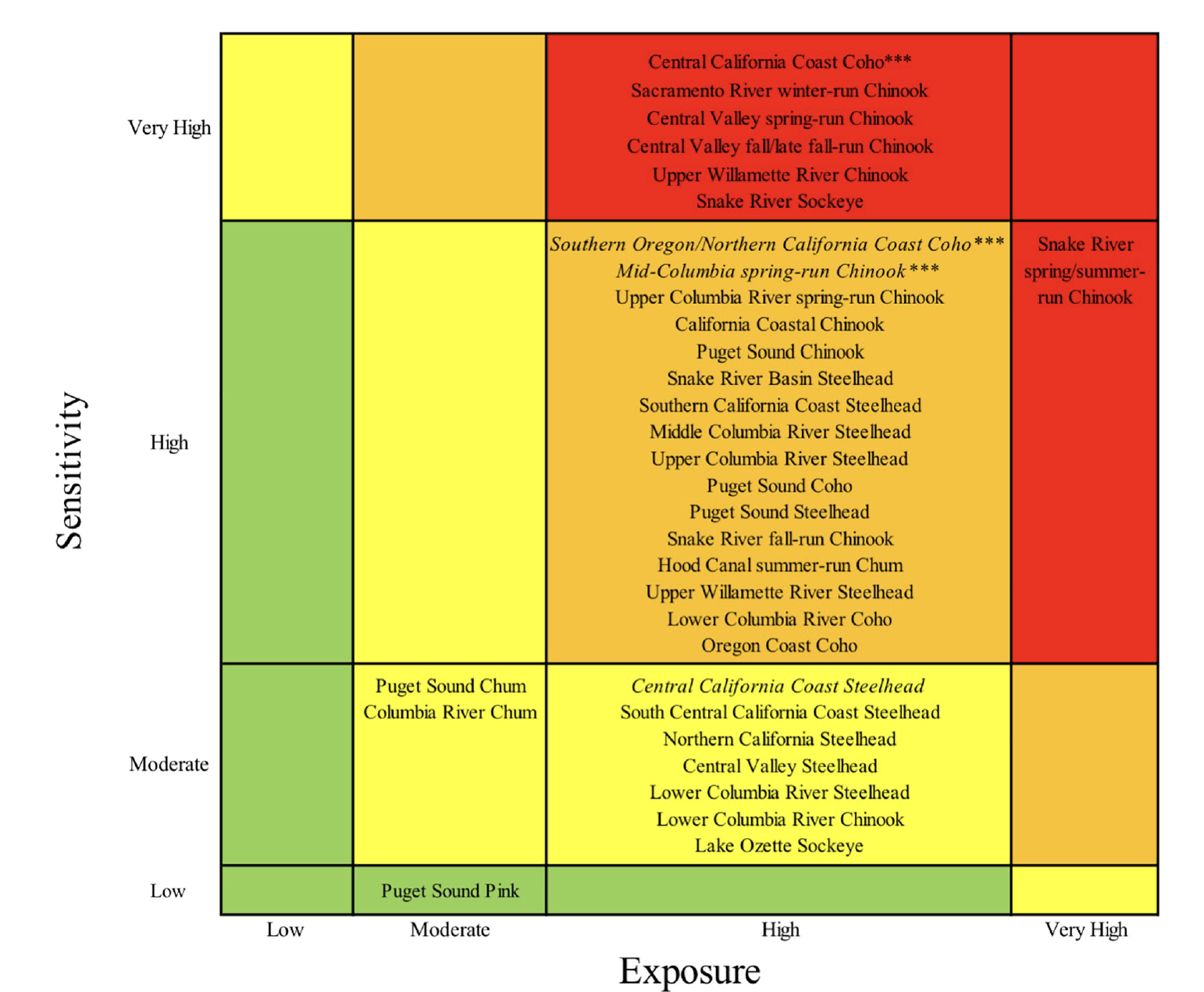
Joining a team of NMFS’ Northwest and Southwest Fisheries Science Center scientists, we conducted two of these climate vulnerability assessment (CVA). The first was for 64 federally-managed species in the California Current Large Marine Ecosystem and the second was for all anadromous Pacific salmon and steelhead population units listed under the US Endangered Species Act.
For the general CVA, species considered highly vulnerable possessed one or more characteristics including: 1) complex life histories; 2) habitat specialization in areas likely to experience increased hypoxia; 3) long lifespans with low population growth rates; and/or 4) being of high commercial value combined with impacts from non-climate stressors. For the salmon CVA, units ranked most vulnerable overall were Chinook (O. tshawytscha) in the California Central Valley, coho (O. kisutch) in California and southern Oregon, sockeye (O. nerka) in the Snake River Basin, and spring-run Chinook in the interior Columbia and Willamette River Basins.
 Ellen Willis-Norton